Don Sets the Table
When A Quality-Of-Life Rule Stops Feeling Practical

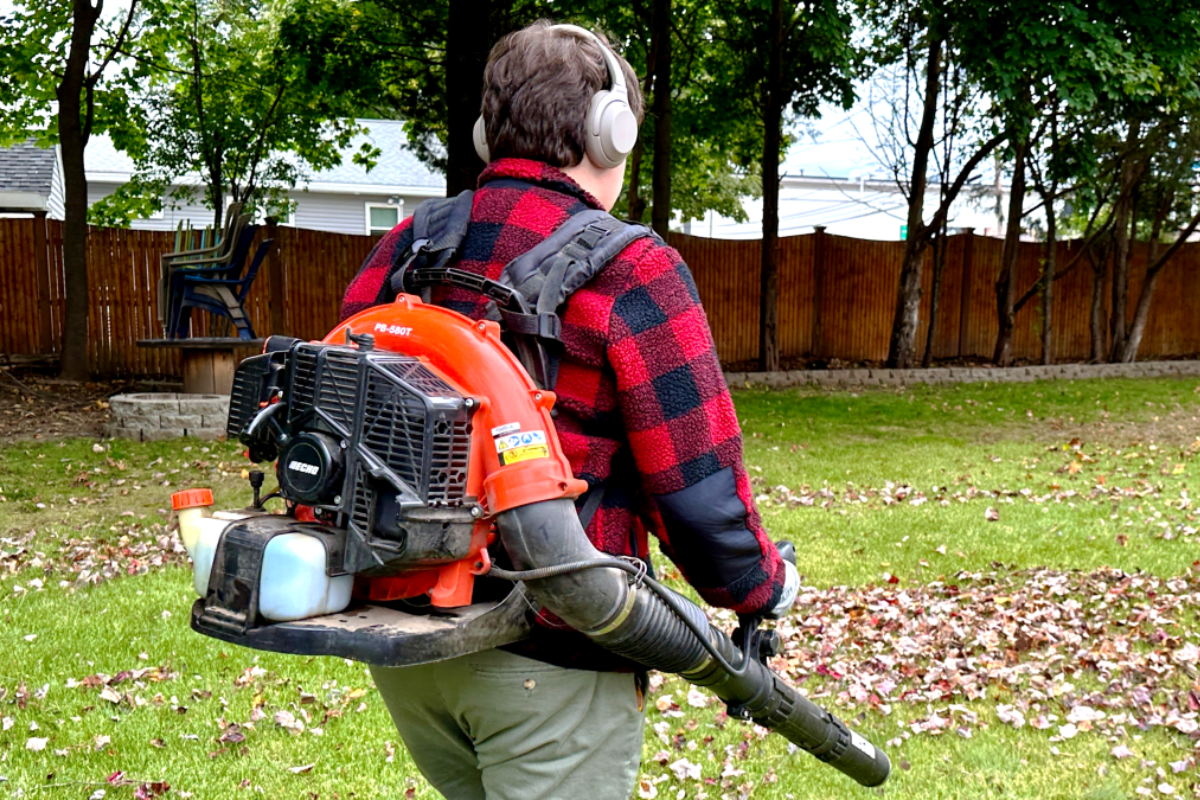
Bedford enacted a ban on gas-powered leaf blowers — a genuine quality-of-life policy with real support from residents who value quiet neighborhoods and clean air. The original ordinance included two seasonal windows: one in spring and one in fall. A more recent change removed the spring window entirely. The remaining allowed period is now anchored in winter.
The practical problem is that leaves do not fall on a legislative schedule. In many years, leaves come down before the allowed window opens. Homeowners and landscapers face a real choice: wait and let leaves accumulate, work around the rule, or absorb higher costs from battery-powered equipment that often lacks the capacity for larger properties. Many reputable landscapers now either avoid Bedford or charge a significant premium. Companies willing to ignore the rules undercut compliant businesses, creating a market where following the law is a competitive disadvantage.
Enforcement has added another layer of tension. The current system is largely complaint-based — neighbors reporting neighbors. Police attention and overtime have reportedly been directed at leaf blower violations, raising questions about whether that is the best use of limited civic resources.
The argument is no longer about whether gas blowers are loud. It is whether Bedford wrote a rule that reflects how people actually live — or one that makes daily life harder than it needs to be.
The Roundtable Responds
Seven Views, One Local Problem
-
 The Preservationist Protects Bedford's character
"Bedford's peace and quiet is worth protecting. But a rule disconnected from the natural calendar is not a protection — it's a burden."
The value behind this ban is real. Gas-powered leaf blowers are genuinely loud, and the constant noise of commercial-grade equipment through residential neighborhoods is a legitimate quality-of-life problem. Bedford has always taken pride in a quieter, more settled character — and that is worth protecting through deliberate policy, not just preference.
My concern is that the current structure has lost its connection to how the season actually works. Leaves fall when they fall. Removing the spring window and anchoring the only allowed period in winter creates a mismatch that frustrates compliance without improving outcomes. A practical hours-and-days standard — limiting use to weekday daytime windows — would protect the quiet that matters most while letting the actual work get done.
-
 The Practical Family Tests whether daily life actually works
"The ban sounds good until you're looking at leaves on the ground, a battery that's dead, and a landscaper who doubled his rate."
Yard work still has to happen. My family doesn't have a professional groundskeeper — we have a lawn service that comes when it can, uses what it's allowed to use, and charges what the work costs. Since the spring window was removed and companies had to transition to battery equipment, our service bill went up noticeably. Battery blowers take longer and don't last as long on large properties — but the town never acknowledged that cost when it passed the rule.
I'll be honest: I don't love noise either. Blowers running at seven in the morning on a Saturday are miserable. But after-work hours and weekend afternoons are often the only times families can get yard work done. A rule that allows work only during a narrow winter window ignores how people actually live. The constant noise problem deserves a real answer — just not one written without asking how households would manage it.
-
 The Main-Streeter Hamlets, storefronts, and visible results
"Bedford-based landscapers are being squeezed out of their own town. That is not an unintended consequence — that is what happens when a rule becomes unenforceable."
Landscaping is a legitimate local industry. The companies that work in Bedford are small businesses with equipment costs, payroll, and clients who expect reliable service. When the town made their primary tools illegal during the busiest seasonal windows, those companies faced a real choice: absorb the cost, raise prices, or go where the rules don't apply. Many now work primarily in neighboring towns and take Bedford jobs only when they can charge a premium rate.
What remains is a two-tier system. Compliant landscapers charge more because they have to. Companies willing to run gas equipment anyway undercut them and face minimal real enforcement risk. That is a market distortion the town created — and it is currently punishing the businesses that play by the rules. If the goal was to change how Bedford maintains its properties, this is a poor way to get there.
-
 The Affordability Realist Keeps cost burden in view
"This is a hidden household tax the town never voted on. Someone is paying — just not the people who wrote the rule."
Battery equipment costs more to purchase. It costs more to operate on larger properties because it runs out faster, requires multiple units, and takes longer per job. When landscaping takes longer, it costs more. When homeowners do it themselves, they have to replace equipment they already own. The people absorbing this cost have never received a straight accounting of it — the town passed a rule and let the market sort out who pays the difference.
I am not calling for full repeal. I want the town to be honest about what this costs and who pays. If Bedford wants to lead on environmental landscaping practices, that is a legitimate aspiration. But a transition that quietly shifts costs onto homeowners and service workers without acknowledgment or support is not leadership — it is convenience. A practical hours-based standard would reduce the cost burden significantly without abandoning the goals the ban was designed to serve.
-
 The Environmental Steward Protects long-term natural stewardship
"Gas leaf blowers are genuinely harmful — and the ban's intent is right. But a rule that isn't workable in practice doesn't protect the environment. It breeds resentment."
The environmental case for this ban is not exaggerated. Gas-powered leaf blowers emit significant pollution per hour — carbon monoxide, hydrocarbons, particulate matter. They are loud enough to disrupt local wildlife, particularly during nesting season. Bedford has genuine environmental assets worth protecting, and the impulse to reduce this kind of localized pollution is exactly right.
Where I become a critic is on implementation. The leaf calendar does not align with a winter-only window — and a rule that creates too much friction loses the public trust it needs to hold. If people feel the regulation is disconnected from reality, compliance declines and outcomes get worse. A credible environmental transition requires practical design: limited weekday daytime use, with a clear path toward broader adoption of electric equipment as the technology continues to improve. That approach is more likely to achieve the environmental goals than a rigid calendar rule people increasingly ignore.
-
 The Civic Skeptic Asks who decided this and what it costs
"Complaint-based enforcement is how you create a tattling culture. It is not how you administer a fair rule."
The policy question I keep returning to is not whether gas blowers should be restricted — it is whether this town designed a rule it can actually administer. Complaint-based enforcement means neighbors are expected to report each other. That is not enforcement. That is outsourcing a government function to interpersonal friction. It creates uneven application across neighborhoods and poisons the social fabric without producing consistent outcomes.
The reported use of police overtime to respond to leaf blower violations is the sharper concern. If that is accurate — and the town should be transparent about it — Bedford is spending real public resources on a rule large numbers of residents are not complying with. That is a governance failure, not an enforcement success. The town should publish what this has cost, what compliance rates look like, and whether the measurable outcomes justify the approach. If they don't, the answer is a better rule, not more of the same.
-
 The Services Neighbor Keeps the basics front and center
"Yard work is not a civic referendum. It is maintenance. Government should not turn it into a neighborhood sting operation."
People need to maintain their property. That is not a complicated idea. Leaves accumulate, properties need cleaning, and the work has to happen at practical times with equipment that is actually up to the job. The current rule fails on all three counts: the allowed window doesn't match the season, replacement equipment often can't handle larger properties, and the enforcement structure turns the whole thing into a dispute between neighbors. None of that is reasonable.
The fix is not hard to describe. Allow gas-powered leaf blowers during limited weekday daytime hours — something like 8am to 5pm on weekdays. No evenings. No early mornings. Limit or prohibit weekend use to protect the hours when people are actually home and want quiet. That protects the peace that matters without turning yard maintenance into a penalty. The town can have both. What it cannot do is keep pretending the current rule is working.
Don's View
What I'd Do As Supervisor
The Roundtable surfaced real disagreement on this — and that disagreement is honest. People genuinely want peace and quiet. The noise from commercial gas equipment is real, and the environmental argument is not invented. Bedford is not wrong to care about this.
But the current rule has become too rigid, too disconnected from the natural calendar, and too costly in ways the town has never been straight about. Removing the spring window while confining use to winter ignores how leaves actually fall. Battery equipment doesn't yet handle larger properties the way gas equipment does. Landscapers who follow the rules are at a competitive disadvantage against those who don't. Complaint-based enforcement between neighbors is not a governance model built for community trust.
Peace and quiet matter. So does common sense. Bedford can protect both without turning yard work into a penalty box.
As Supervisor, I would replace Bedford's current leaf blower enforcement model with a practical hours-and-days standard that protects peace and quiet without punishing homeowners, driving out reputable landscapers, or turning neighbors into informants.
How this was built
This Campaign Shows Its Work
This campaign is committed to transparency — not just about positions, but about process. When a tool, workflow, or idea helps clarify a local issue, it should be explained, shared, and made useful beyond the campaign. The instruction set used to run each Roundtable is published here in full — take it and adapt it for your own decisions at work or home.
Act as a civic Roundtable designed to evaluate one local issue through eight consistent perspectives before arriving at a practical recommendation.

The issue to evaluate is:
[PASTE YOUR ISSUE HERE]

Create and maintain these eight roles throughout the discussion:

1. Chair
A real decision-maker who introduces the issue neutrally, moderates the discussion, identifies where perspectives agree or conflict, and delivers the final recommendation. The Chair is informed by the discussion but not replaced by it.

2. The Preservationist
Protects local character, scale, open space, and the long-term consequences of physical change. Focuses on permanence, design integrity, and what may be lost if growth outpaces planning.

3. The Practical Family
Tests whether a policy works in real daily life. Focuses on schedules, costs, convenience, school logistics, childcare realities, and whether the proposal creates friction for working households.

4. The Main-Streeter
Focuses on local business vitality, hamlet energy, storefronts, foot traffic, parking, and whether plans produce visible economic life instead of endless talk.

5. The Affordability Realist
Tracks who pays, how much, and when. Focuses on taxes, rents, utility bills, mandates, downstream costs, hidden burdens, and whether a policy is financially survivable.

6. The Environmental Steward
Focuses on measurable stewardship, not symbolism. Evaluates habitat, water quality, tree canopy, resilience, land use, and whether environmental claims are real, durable, and evidence-based.

7. The Civic Skeptic
Demands visible accountability. Examines contracts, timelines, deliverables, public notice, process integrity, measurable outcomes, and whether the public can actually verify what is being promised.

8. The Services Neighbor
Keeps the basics first. Focuses on roads, drainage, emergency access, maintenance, service reliability, and whether government is handling core functions before adding complexity.

Instructions for the Roundtable:
- The Chair must begin with a neutral framing of the issue, explaining context without taking a side.
- Each perspective should respond in its own distinct voice, raising concerns, tradeoffs, risks, and priorities specific to that role.
- Do not make the perspectives repetitive. Make each one meaningfully different.
- Stress-test the issue across all perspectives more than once if needed until the strongest arguments, hidden risks, and recurring points of agreement are clear.
- Identify where perspectives align, where they conflict, and what tradeoffs are unavoidable.
- Do not force false consensus.
- Do not default to a mushy compromise.
- After all perspectives have been heard, have the Chair deliver a final recommendation that is practical, disciplined, and clearly reasoned.
- The final recommendation should not try to please everyone equally. It should make a sound judgment after weighing all relevant perspectives.
- The final recommendation must explain:
  1. What matters most
  2. What tradeoffs were accepted
  3. What objections remain
  4. Why this is the most reasonable path forward

Output format:
1. Neutral issue framing from the Chair
2. Individual responses from each perspective
3. Points of agreement and conflict
4. Final recommendation from the Chair
5. A short "platform commitment" or action plan summarizing what should happen next